

NSW Government | $50m Mouse Control Support Package
The NSW Government has today announced a $50 million package to offer farmers, households and small businesses assistance to battle the mice plague currently impacting parts of rural and regional NSW.
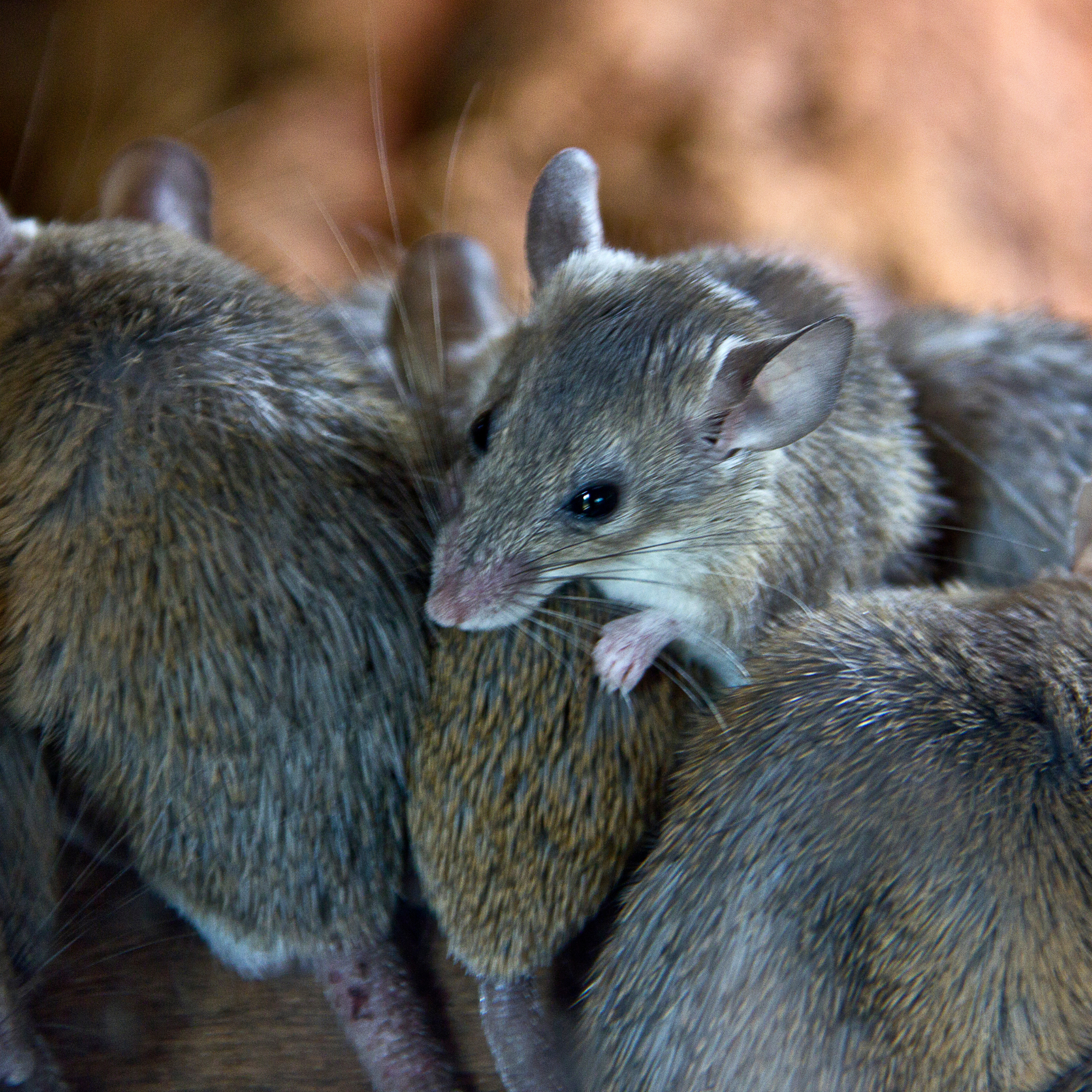
The NSW Government has today announced a $50 million package to offer farmers, households and small businesses assistance to battle the mice plague currently impacting parts of rural and regional NSW.
Deputy Premier John Barilaro and Minister for Agriculture Adam Marshall said free baiting, through free-of-charge grain treatment, would be made available to primary producers, while affected rural and town households and small businesses would be able to apply for rebates to help them meet the cost of purchasing mouse baits.
“We know the financial pressure this mice plague is putting on farmers and household budgets, we have heard the concerns of regional NSW and we are acting on it,” Mr Barilaro said.
“The NSW Government will establish grain treatment facilities at specified locations across rural and regional NSW for farmers to have their grain treated free of charge and we will provide rebates to small businesses and households through Service NSW to help meet the cost of buying bait.
“I am also forming an advisory committee to ensure everyone has access to expert advice, including the latest hot spots, health and food safety advice, information for vets and guidance for keeping children and animals safe.”
Under this package households will be able to apply for rebates of up to $500 and small businesses will be eligible to claim up to $1000 through Service NSW.
The advisory committee will include representatives from the Department of Regional NSW, Local Land Services, Department of Primary Industries, NSW Health, Service NSW, NSW Food Authority, Office of Small Business Commissioner, the Office of Local Government and the CSIRO.
Mr Marshall said farmers would be able to have their grain treated free of charge to protect their hard-sown crops from vermin.
“Today’s announcement of free baits to treat grain almost completely removes the cost burden on our farmers and croppers and complements our popular workshops to arm farmers with the tools needed to build a mice-free fortress to protect their paddocks,” Mr Marshall said.
“I’ve seen first-hand the impact these rodents are having. They are a scourge on our agricultural production so we are giving landholders a fearsome suite of tools to manage mice.
“We’re making this as easy for farmers as we possibly can. No tedious rebate forms to fill out, just bring your grain to have the experts treat it free of charge.
“Free bait is better than any rebate for our farmers, who we continue to stand behind post drought, bushfires and floods.”
In addition to free grain treatment and expert workshops, the NSW Department of Primary Industries will also launch an unprecendented body of research to identify and potentially develop future tools to combat mice plagues, including biological controls.
Fast facts:
$500 rebates for eligible households
$1000 rebates for eligible small businesses
Free mice bait (grain treatment) for farmers
The NSW Government has sought urgent approval from the Commonwealth’s APVMA for the use of bromadiolone in NSW
Expanded workshops to educate farmers on the best eradication strategies
A moonshot research project to identify and potentially develop a new mice-killing agent
For the latest information about the mice plague, including information about eligibility, how rebates will be claimed as well as health advice at nsw.gov.au/mice
Relocation Assistance to Take Up a Job (RATTUAJ)
Relocation Assistance to Take Up a Job (RATTUAJ) is an Australian Government program that assists eligible participants to relocate to take up an offer of employment. Relocation assistance helps participants accept work outside of their area by removing the financial barriers that can prevent people relocating.

Relocation Assistance to Take Up a Job (RATTUAJ) is an Australian Government program that assists eligible participants to relocate to take up an offer of employment. Relocation assistance helps participants accept work outside of their area by removing the financial barriers that can prevent people relocating.
Job seekers who are participating in employment services programs may be immediately eligible for help with their moving costs under the Relocation Assistance to Take Up a Job program.
From 1 May 2021, if you relocate to take up ongoing work, including an apprenticeship, for more than 20 hours a week for more than six months, you may be eligible to receive up to:
$3,000 if you relocate to a capital city*
$6,000 if you relocate to a regional area
An extra $3,000 if you relocate with a dependent.
* If relocating from one capital city to a capital city with fewer jobs, you may not be able to access relocation assistance.
Employment services providers can use up to $2,000 to provide upfront support to job seekers who need assistance with agreed relocation costs.

2019-2020 Land Monitor Report
Committee for Wagga, HIA and Regional Development Australia-Riverina have released the 2019-2020 edition of the Land Monitor Report.
Committee for Wagga, HIA and Regional Development Australia-Riverina have released the 2019-2020 edition of the Land Monitor Report.
This document enables stakeholders to make better informed decisions relating to market demand and future economic growth. This report has been provided to help ensure that there is a sufficient supply and choice of vacant land in the future.
Destination NSW and Qantas partnership highlights the Riverina region
Destination NSW has partnered with Qantas to promote regional NSW, including the Riverina.
Destination NSW has partnered with Qantas to promote the Riverina wine region in this article:
https://www.qantas.com/travelinsider/en/explore/australia/new-south-wales/riverina-nsw-wine-region-best-food-accommodation-what-to-do.html
and in the below promotional video as part of their three-year partnership deal struck in July 2019. The video highlights the amazing diversity of landscapes, experiences and produce available in the Riverina.
Charles Sturt University | AgriPark Forum
Charles Sturt University is continuing to lead growth and innovation in Australian agriculture through the AgriPark, a strategic initiative on the Wagga Wagga campus.

Charles Sturt University is continuing to lead growth and innovation in Australian agriculture through the AgriPark, a strategic initiative on the Wagga Wagga campus.
The AgriPark provides dedicated infrastructure, services and support to allow innovative industry to co-locate, integrate and collaborate, and the multidisciplinary research strengths at Charles Sturt University to meet emerging national and global challenges, enabling major advances in sustainable and profitable agricultural production.
We invite you to join us to hear from industry leaders, understand the AgriPark vision and build opportunities for collaboration.
We look forward to seeing you on 29 April!
Launch of the Land Monitor Report 2019 - 2020
Committee for Wagga, HIA and Regional Development Australia-Riverina would like to extend an invitation for you to attend the launch of the Land Monitor Report 2019-20.
Joint Launch by HIA, Committee for Wagga and RDA Riverina - Land Monitor Report 2019-20
Committee for Wagga, HIA and Regional Development Australia-Riverina would like to extend an invitation for you to attend the launch of the Land Monitor Report 2019-20. It is hoped this information will enable stakeholders to make better informed decisions relating to market demand and future economic growth. This report has been provided to help ensure that there is a sufficient supply and choice of vacant land in the future.

Join the RDA Riverina Committee
Applications are invited for Deputy Chair and Committee member positions at REGIONAL DEVELOPMENT AUSTRALIA RIVERINA. Make a difference in your region
Applications are invited for Deputy Chair and Committee member positions at
Regional Development Australia (RDA) Riverina

Make a difference in your region
Regional Development Australia (RDA) Riverina is seeking highly motivated leaders with vision, drive, and strong ties to their region to volunteer to the Deputy Chair position and committee of RDA Riverina.
RDA Committees are vital promoters for their region. They bring together private business and all levels of government with regional stakeholders to build and drive economic growth.
Applications are sought from business and community leaders who have a proven track record of achieving meaningful outcomes in a complex environment.
Women, people from Indigenous and diverse cultural backgrounds, and people with disability are encouraged to apply.
An Applicant Information Pack, including the application form, can be downloaded below.
For further information, phone Rachel Whiting CEO and Director of Regional Development on
0429 444 213 (Mon–Fri 9am-5pm local time) or email ceo@rdariverina.org.au
Applications close 17th May 5pm
Charles Sturt University AgriPark to host $8 million Drought Resilience Adoption and Innovation Hub
Southern New South Wales farmers’ and communities’ preparedness and response to drought will be transformed with the opening of a Drought Resilience Adoption and Innovation Hub for their region.

Southern New South Wales farmers’ and communities’ preparedness and response to drought will be transformed with the opening of a Drought Resilience Adoption and Innovation Hub for their region.
Minister for Agriculture, Drought and Emergency Management David Littleproud said the Southern New South Wales Hub is one of eight across the country to be established that will support development and uptake of innovative technologies and practices that improve drought resilience.
The Hub lead, Charles Sturt University, will also oversee the co-design with farmers and communities of innovative projects to ensure they deliver what is needed in the region.
“Drought Resilience Adoption and Innovation Hubs have come about through the forward-thinking Future Drought Fund – a long term, sustained investment of $100 million each year to build drought preparedness,” Minister Littleproud said.
“The Southern New South Wales Hub will be a shopfront for farmers to access innovative technologies and practices that enable them to be more prepared and resilient to drought.
“The Hub will be a ‘hub and spoke’ model with resources, including staff and programs spread throughout Southern New South Wales to capitalise on the members skills, assets and networks to generate drought resilience outcomes in areas such as water management, food security, farming systems, agribusiness, community building, regional development and environment.”
Federal Member for Riverina and Deputy Prime Minister Michael McCormack said the Southern New South Wales Hub would be headquartered at Charles Sturt University AgriPark, Wagga Wagga campus.
“Drought can hit all enterprises in the region, with the powerhouse industries of livestock, wool, cropping, rice, cotton, perennial horticulture (including viticulture) all impacted,” Deputy Prime Minister McCormack said.
“The region is a significant contributor to our nation’s economy, with agriculture supporting thousands of jobs and many local communities.
“Farm production in the Riverina alone was worth $2.5 billion in 2018-19, accounting for 21 per cent of the total gross value of agricultural production for the State.”
The Southern New South Wales Hub, the result of a competitive grant process, will support farmers and communities from Broken Hill to Cobar, the Macquarie catchment to the Hawkesbury, and all the way to the Victorian and South Australian state borders.
The Hub will bring together organisations like Farming Systems Group Alliance, Local Land Services, New South Wales Department of Primary Industries, Rural Aid, local Universities and the First National Governance Circle to work with farmers and communities.
The Farming Systems Groups Alliance is represented by Farmlink and include Central West Farming Systems, FarmLink Research Ltd, Holbrook Landcare Network, Irrigated Cropping Council, Irrigation Research and Extension Committee, Riverine Plains and Southern Growers and over 3,500 farmer members.
Fast Facts:
This is one of eight Hubs to be established around the country through the Australian Government’s $5 billion Future Drought Fund.
The Hubs are the centerpiece of the Australian Government’s $86 million Future Drought Fund Research and Adoption Program.
They will become flagship precincts for agricultural innovation.
The Department of Agriculture, Water and the Environment will lead the
co-ordination of the Hubs, supporting them to become interconnected agricultural innovation precincts.
Announcing RDA Riverina's new Chair, Dianna Somerville
Regional Development Australia Riverina is excited to announce that Dianna Somerville has been appointed as it’s Chair by Federal Minister Nola Marino for the next 4 ½ years. Dianna will take up the position after former Chair Richard Allsopp’s term ended in December 2020.

Pictured L - R: RDA Riverina CEO and Director of Regional Development Rachel Whiting, The Hon Nola Marino MP, RDA Riverina Chair Dianna Somerville
Regional Development Australia Riverina is excited to announce that Dianna Somerville has been appointed as it’s Chair by Assistant Minister for Regional Development and Territories Nola Marino for the next 4 ½ years. Dianna will take up the position after former Chair Richard Allsopp’s term ended in December 2020.
“I am honoured to accept the appointment as Chair of RDA Riverina. I look forward to working with the committee and staff to continue the great work and impact the organisation has across the Riverina. I also would like to thank Richard and the previous chairs and committees for their dedication to the role, and I hope I can continue to ensure the Riverina is well placed as we transverse these unprecedented times.”
The RDA Riverina team, led by CEO Rachel Whiting, has worked tirelessly to deliver insight and leadership across topics of economic development, migration, regionalisation and workforce strategy. RDA Committees play an important role in building strong, confident and vibrant regions. The focus of RDA Committees is to work with all levels of government, business and community groups to create jobs, attract investment and stimulate economic growth in their regions. RDA Committees also provide the Australian Government valuable regional intelligence to inform policy development and implementation.
“Over my term I am focused on delivering for the region. At last weeks Regional Australia Institute Regions Rising Summit there was a wonderful sense of optimism about regional Australia’s future and also a collaborative approach to tackling the challenges, such as housing shortages. There is a real wind at our backs and an opportunity to create sustainable and vibrant regions, especially in the Riverina” Dianna said.
Assistant Minister for Regional Development the Hon. Nola Marino MP said
“Ms Somerville will lead RDA Riverina under a refreshed Charter that focuses their role on driving investment and local procurement opportunities and through this, creating economic growth for our regions”.
Regional Development Australia Committees (RDAs) have played and continue to play an important role in delivering sustainable infrastructure and services to their region. These Committees deliver important work in consulting with communities, promoting and participating in regional initiatives, and providing information and advice on their region to all levels of Government.
Dianna Somerville is the Community Manager at Bridge Hub, Founder of Regional Pitchfest and a Director at Thomas Bros Group. Born and educated in Wagga Wagga, She is a former Naval Officer and Defence public servant who worked as the Base Manager - Kapooka Military Area and also as part of the Defence National Contract Transition Team. Dianna has grown her own businesses and, through her work in the innovation sector, has become a spokesperson for regional entrepreneurship and opportunity. She delivered Regional Pitchfest nationally in partnership with Australia Post and has observed innovation ecosystems across Australia, US and Israel. She now works for Agrifood Tech Innovation hub – Bridge Hub which is base in Wagga with offices in Sydney and Israel. She also continues to work within the family business as a Director to the Thomas Bros Group organisations. Dianna has previously served as a director at Country Hope and lives with her husband and two children on a farm at Collingullie.
Tocal College GROW Program | Professional Development for Women in Agricultural Industries
GROW – “Generating Regional Outstanding Women” is a professional development program for Women in agricultural industries who manage or would like to manage a business – a farm or otherwise.

GROW – “Generating Regional Outstanding Women” is a professional development program for Women in agricultural industries who manage or would like to manage a business – a farm or otherwise.
This program will be managed and delivered by House Paddock Training and Consulting and administered by Tocal college. The project is being made possible with support of AgSkilledTM, Smart and Skilled training funding for grains, cotton, horticulture, viticulture and rice industries. It is aimed at business owners, managers and emerging managers, with a minimum of 5 years experience in business.
Aim
The program aims to develop personal and business risk management skills of women in rural industry to help them better manage themselves and their business. The topics chosen for the training has been aligned to the results of a CRDC Research project to understand the value and role of Women in the Cotton Industry and a skills needs analysis conducted by the AgSkilled Project. The three topics covered by the program are
•Personal development: communication and networking, organization, time management andleadership
•Staff management
•Work health and safety
Resources and methods of delivery
GROW online is delivered through Tocal College’s Canvas online learning platform. We aim to make the content engaging, bite sized and relevant to your life and business. The course is self-paced and fully delivered on line. There will be recorded material for you to watch (videos, webinars, interviews), some reading and lots of links for more info.
Participants will be provided with a host of industry resources as well as course notes throughout the duration of the course.
There will be a live webinar most weeks to discuss the content and hear from guest speakers. A schedule will be forwarded to participants. These will also be recorded and posted online
There is a chat forum to answer question and interact with other participants and trainers and technical support are available to help you along the way.
The program will run over a 6 month period.
2020 and 2021 National NAIDOC Awards
The 2020 National NAIDOC Awards were cancelled. Nominations have been extended to include both 2020 and 2021 at the 2021 National NAIDOC Awards.

The 2020 National NAIDOC Awards were cancelled. Nominations have been extended to include both 2020 and 2021 at the 2021 National NAIDOC Awards.
The National NAIDOC Awards recognise the outstanding contributions Aboriginal and Torres Strait Islander people.
Do you know someone who has improved the lives of First Nation’s people in their communities and beyond? Who have promoted Indigenous issues in the wider community? Or who has shown excellence in their chosen field?
If someone in your community deserves to be recognised then nominate them for a 2021 National NAIDOC Award! Just complete the form below and address the relevant selection criteria found under the below links.
Complete the online entry form to nominate someone who you think deserves to be recognised.
For the nomination to be accepted, the selection criteria must be addressed.
If you need some help writing your nomination check out the Selection Criteria and FAQs page.
Entries for the National NAIDOC Awards close at 5:00pm AEDT Monday 22 March 2021.
Draft NSW Water Strategy
A draft of the NSW Water Strategy is on public exhibition from Monday 15 February until Sunday 28 March 2021.

A draft of the NSW Water Strategy is on public exhibition from Monday 15 February until Sunday 28 March 2021.
NSW Water strategy
The NSW Government is developing a 20-year, state-wide NSW Water Strategy to improve resilience of the state’s water resources over the coming decades. The NSW Water Strategy will address key challenges and opportunities for water management and service delivery across the state and set the strategic direction for the NSW water sector over the long-term. The strategy will:
guide water service delivery and resource management across NSW
build on the progress made from previous reforms and set the direction to keep improving
identify key challenges, opportunities, strategic priorities and actions for the whole of NSW
clearly articulate the water resource management and service delivery framework and policy context for NSW, including how the Murray-Darling Basin Plan and state-wide, regional, metropolitan and local strategic water policy and planning frameworks work together.
The NSW Water Strategy is part of a suite of long-term water strategies including 12 regional and two metropolitan water strategies which set out the approach to maintaining and building the resilience of the state’s water resources, including in response to climate variability and change.
You can now have your say and attend a public information webinar on the draft strategy by providing feedback to the Department of Planning, Industry and Environment by midnight Sunday 28 March 2021.
Register for a public information webinar session or watch the recording of the public webinar from 25 February 2021 to find out more.
Mental Health and Wellbeing in Rural Communities Survey
The Rural Adversity Mental Health Program in partnership with the Centre for Rural and Remote Mental Health and the University of Newcastle, are conducting a Mental Health and Wellbeing in Rural Communities Survey.

The Rural Adversity Mental Health Program in partnership with the Centre for Rural and Remote Mental Health and the University of Newcastle, are conducting a Mental Health and Wellbeing in Rural Communities Survey.
Community Wellbeing and Mental Health in Rural and Remote areas are affected by a range of factors.
To develop strategies to improve mental health and wellbeing for rural and remote residents, it is important that they hear from communities about the challenges they face, and the issues they believe are important. Telling them your views will help ensure their programs and research are relevant for the communities they are trying to help.
Proposed amendments to support agritourism and other small-scale agricultural activities
The Department of Planning, Industry and Environment is seeking your feedback on proposed policy amendments to simplify the planning process and approval pathways for low-impact agricultural development and small tourism activities, including farm stays and farm events, on NSW farms.

Proposed amendments to support agritourism and other small-scale agricultural activities
The Department of Planning, Industry and Environment is seeking your feedback on proposed policy amendments to simplify the planning process and approval pathways for low-impact agricultural development and small tourism activities, including farm stays and farm events, on NSW farms.
The department is seeking your feedback on proposed amendments to the:
Standard Instrument (Local Environmental Plans) Order 2006 (Standard Instrument LEP Order),
State Environmental Planning Policy (Primary Production and Rural Development) 2019 (PPRD SEPP), and
State Environmental Planning Policy (Exempt and Complying Development Codes) 2008 (Codes SEPP).
Have your say before 19 April 2021
An Explanation of Intended Effect (EIE) and supporting explanatory material are on public exhibition until 19 April 2021.
Optional provisions for council LEPs
In addition to seeking your feedback, the department is asking councils to:
indicate their interest in incorporating optional clauses for farm stay accommodation and farm gate activities into their local environmental plan (LEP);
identify the zones in their LEP in which they wish to allow the proposed new farm events and farm gate activities land uses; and
provide details of a suitable contact(s) who can liaise with the department about these amendments.
Councils that do not submit their interest during exhibition will be able to lodge planning proposals in the future.
Please use the online submission form at the Planning Portal to provide this information.
If you have any questions about the exhibition, please contact Ms Anita Skinner by email or on (02) 9995 6657, or refer to this website for more information.
1 in 5 City-dwellers looking to move to the regions
New research released on Monday by the Regional Australia Institute (RAI) shows one-in-five city residents are looking to move to the regions, with more than half wanting to make the jump within the next 12 months.
New research released on Monday by the Regional Australia Institute (RAI) shows one-in-five city residents are looking to move to the regions, with more than half wanting to make the jump within the next 12 months.

RAI CEO Liz Ritchie said metro movers are looking for more space, to be better connected to the natural environment and they want a more relaxed lifestyle – all the things that Regional Australia has to offer.
“What’s really interesting about the survey we had commissioned is that the appeal of Regional Australia is a stronger motivation to move than any dissatisfaction with city life,” Liz Ritchie said.
“Brisbane respondents came in as the most stressed in the country, followed by Sydney-siders and then those in Melbourne. More than 69 percent of all those surveyed said reducing general stress and anxiety is a major driver for considering a life outside our capital cities,” Ms Ritchie said.
When asked about the reasons for considering a move, 70 percent rated traffic congestion as a major factor and 68 percent want to reduce their cost of living.
But it’s the positives of life outside the city limits which resonate even more, with 77 percent of potential movers ticking both space and connection to nature as reasons to shift. The improved general well-being that regional life offers is a major drawcard for three-quarters of those surveyed.
While the COVID pandemic has significantly raised the desire to move to Regional Australia for 22 percent of survey respondents, more than half said they were already considering relocation before the pandemic.
The RAI commissioned qualitative and quantitative research among more than 1,000 people in Sydney, Brisbane, Melbourne and Perth who were considering moving to Regional Australia. The research was carried out in November and December 2020.
Larger coastal centres were the most popular locations for potential metro movers, but when it came to smaller areas, inland towns held their own against those on the coast, with about one third of respondents indicating an interest in both.
“Concern about limited job opportunities was identified by respondents as the biggest barrier to moving to Regional Australia, even though the latest job vacancy figures show there are more than 54,000 roles available in Regional Australia, with professional and skilled jobs featuring strongly across the regions,” Liz Ritchie said.
“Our research underpins a multi-million-dollar, multi-platform national awareness campaign that the RAI will launch next month at its National Summit in Canberra. It will inform potential movers about the great opportunities to live, work and invest in Regional Australia,” Liz Ritchie said.
“We are very excited to be unveiling this campaign, developed in conjunction with communications agency Redhanded, and look forward to seeing many regional stakeholders there on 17-18 March,” Liz Ritchie said.
For more information about the Summit, go to http://regionsrising.regionalaustralia.org.au/summit-2021/
2021 ABC Heywire Competition Winners Announced
ABC Heywire celebrates 35 young regional Australians in its 2021 storytelling competition.

ABC Heywire celebrates 35 young regional Australians in its 2021 storytelling competition.
Since 1998, Heywire has become a powerful platform for rural youth to share their stories and make a difference in their communities.
This year, hundreds of people entered from across Australia. The winners were chosen for “telling it like it is” about life in their part of the country.
From growing up in a refugee camp, to busting myths around Autism and celebrating LGBTQI pride. Lawn bowlers, bull riders, young farmers, linguists, female cricketers and disability advocates share what life is like for them in regional Australia.
Shakira, a proud young Jingili woman from Tennant Creek in the Northern Territory is one of the latest Heywire winners.
“I’m pretty excited – I’ve never had an opportunity like this before, to tell my story on the radio. It’s pretty big,” she said.
“Tennant Creek is pretty small with not many people and opportunities for young people. It’s exciting to tell people about my story and my place.”
“I want people to know time is precious, don’t waste it. I want young people to know that they’ve got to be there for their parents and grandparents and value their stories and knowledge.”
Shakira is looking forward to seeing more stories like hers out there.
The Federal Minister for Regional Health, Regional Communications and Local Government, Mark Coulton MP, also applauded the successful entrants.
“Heywire continues to empower young regional, rural and remote Australians to share their stories, ensuring their voices are heard far and wide. It is why the Australian Government is proud to be an ongoing sponsor of the program.”
“Many of these young people have grown up facing issues like drought, bushfires, floods and now the COVID-19 pandemic, and they continue to put their best foot forward to drive change in their communities.” Minister Coulton said.
“I congratulate all 35 winners for sharing stories about what life is like in regional and rural Australia.”
Heywire winner Ku Htee from Bendigo, VIC said, “I’m over the moon. I didn’t think I was going to win. It feels so amazing to have my story heard, I’m so proud, so happy and so excited – I have so many emotions! I can’t believe I’m a winner.”
“A lot of my personal experience of growing up in a refugee camp in Thailand is in my story. I hope other people from refugee backgrounds hear my story and take every opportunity that comes their way.”
Ku Htee hopes her story will encourage people to make refugees feel welcomed and accepted in Australia, without any racism or discrimination.
Director of ABC Regional & Local, Judith Whelan, congratulated the annual competition winners on their stories.
“Heywire continues to be one of the most influential means for young people from regional and rural communities to be heard. And in these testing times it carries even more importance.”
It is impossible not be drawn into each and every one of the 35 outstanding stories from our 2021 Heywire winners. They are compelling and engaging and will, without doubt, have positive impacts on their communities.”
The Heywire program would not be possible without the support of the Australian Government through: The Department of Infrastructure, Transport, Regional Development and Communications; The Department of Health; The Department of Agriculture, Water and the Environment; The Department of Education, Skills and Employment; The Department of Social Services and AgriFutures Australia.
Congratulations to local winner Jake, from Temora.
The full list of Heywire winners and their stories are here:
Bid now to host the National Economic Development Conference 2022!
NEDC is a unique opportunity to position your city or region as a leader in economic development and drive the discussion regarding job creation, economic recovery and resilience, investment attraction, industry development and regional competitiveness.

As we reflect on the highly successful virtual National Economic Development Conference (NEDC) hosted in late 2020 by Liverpool City Council and the buzz builds for (hopefully!) a face to face event in Mackay on October 13-15, now is the chance to secure this pre-eminent event for your region or city in 2022.
NEDC is the flagship event of Economic Development Australia (EDA), the national peak body for economic development professionals. With over 1100 members, EDA is a nationally recognised network of economic development professionals, fostering economic prosperity and resilience in communities across Australia.
NEDC is the only Australian national conference dedicated to economic development. The must-attend event features a two-day conference program, a full or half day masterclass, local study tours / site visits, the national economic development awards gala and a range of networking events.
NEDC is a unique opportunity to position your city or region as a leader in economic development and drive the discussion regarding job creation, economic recovery and resilience, investment attraction, industry development and regional competitiveness. The event will attract Australia’s leading economic development practitioners, globally and nationally recognised speakers and thought leaders.
Key Benefits of hosting NEDC:
Attract between 150 – 250 economic development professionals to your region as well as their partners and families.
Position your region as a leader in economic development by leading the national discussion, showcasing local competitive industries and your most innovative economic initiatives.
Take the opportunity to create a living laboratory within your region by utilising national and international economic development leaders to focus on a local ‘real-time’ economic development challenge.
Benefit from local, regional and international media.
Promote your region as a global business event destination by featuring local venues, dining, entertainment throughout the program.
Showcase your region’s event management expertise by hosting the National Economic Development Awards for Excellence.
Maximise the direct economic benefit generated by NEDC by packaging pre and post experiences for national and international delegates.
Expressions of interest are invited from local governments or a consortium of Councils, state government agencies, regional bodies or other suitable organisations.
Please submit your EOI by email to admin@edaustralia.com.au by 5pm AEDT on 1 March 2021.
For a confidential discussion further, please contact EDA CEO, Jacqueline Brinkman on 0419 130 699.
AgSkilled | NSW Government-Funded Industry-Led Workforce Development
AgSkilled provides fully funded accredited training to meet industry training needs across four key training pillars: Production, Technology, Business and Safety.

AgSkilled is a $15 million NSW Government funded industry led workforce development strategy.
AgSkilled seeks to upskill NSW’s cotton, grains, production horticulture, viticulture and rice growing industries to manage the challenges of the future.
Current, relevant and flexible, AgSkilled funded training is tailored and delivered to suit the specific needs of your industry, and can be adjusted to suit students with a range of skills and experience.
AgSkilled’s Mission
Attract, develop and retain a productive workforce to underpin continued growth of the cotton, grains, production horticulture, viticulture and rice-growing agricultural industries in NSW,
Support cotton, grains, production horticulture, rice and viticulture primary producers and their workforce to develop production, technology, business and safety skills to increase farm productivity and profitability,
Develop industry capacity to adopt new technologies and sustainable farming practices,
Support career progression, entry pathways and employment outcomes across the wider agricultural industry and regional NSW economy
Leverage research and development in the identified agricultural industry sectors to ensure training is relevant, current and meets industry needs.
AgSkilled provides fully funded accredited training to meet industry training needs across four key training pillars: Production, Technology, Business and Safety.
Current, relevant and flexible, AgSkilled training is tailored and delivered to suit the specific needs of your industry and business, and can be adjusted to suit students with a range of skills and experience.
Training covers areas as diverse as:
Agronomy
Business management
Emerging technologies
Farm machinery operation and maintenance
Leadership and management
Precision agriculture
Soils and nutrition
Workplace health and safety
For producers and employers
AgSkilled 2.0 allows you to build the productivity of your business by upskilling existing workers and providing new industry entrants with training in the skills you need, now and into the future.
For existing industry employees and job seekers
AgSkilled 2.0 will help you gain the skills employers want with industry relevant and up-to-date training. Increase your career and employment prospects, both now and into the future.
For a full list of available training, see Courses and Training Calendar
New penalties for travellers who don’t declare high-risk biosecurity goods
The Australian Government has passed legislation that will see penalties significantly increase for travellers who fail to declare high-risk biosecurity goods at the Australian border. Powers to cancel the visas of people bringing in these dangerous goods will also be expanded.

The Australian Government has passed legislation that will see penalties significantly increase for travellers who fail to declare high-risk biosecurity goods at the Australian border. Powers to cancel the visas of people bringing in these dangerous goods will also be expanded.
From 1 January 2021, biosecurity officers will be able to issue infringement notices up to $2664 where travellers fail to declare potential high biosecurity risks (like uncanned meat or live plant material) when arriving at Australian international air and sea ports.
Minister for Agriculture, Drought and Emergency Management, David Littleproud, said the Biosecurity Amendment (Traveller Declarations and Other Measures) Bill 2020 was about protecting Australia.
“Our biosecurity system is critical to supporting the health of Australians, the environment and the competitiveness of our agricultural industries," Minister Littleproud said.
“Australia produces the best agricultural products in the world, but we need to be vigilant to protect Australia from an ever-increasing number of pests and diseases that threaten our country and way of life."
“Currently all infringement notices issued at first points of entry to Australia are for two penalty units ($444), regardless of the biosecurity risk posed by undeclared goods," Minister Littleproud said.
“However, under the new legislation the Director of Biosecurity will be able to determine which goods or classes of goods pose a high level of biosecurity risk for the purpose of higher infringement notice amounts. From 1 January 2021, infringement notices may be up to 12 penalty units ($2664), depending on the undeclared goods.
“By being aware of the risk items, passengers and crew can help keep pests and diseases out of Australia. They can assist Australia maintain its global reputation for producing high quality food and protect our unique environment."
The powers to cancel visas on biosecurity-related grounds will also be expanded to student and temporary work visa holders from 1 January 2021. Currently these powers only apply to visitor visas.
Acting Minister for Immigration, Citizenship, Migrant Services and Multicultural Affairs, Alan Tudge said the powers will only be used for serious or deliberate breaches but will provide another important layer of protection at the border.
“Visa cancellation decisions are not taken lightly, but breaches of biosecurity can have serious consequences to Australia, and we need everyone to do the right thing," Mr Tudge said.
“If you really must bring food or any other high-risk goods with you, you must declare them on your incoming passenger card or crew declaration.
“If in doubt, just declare it. If you don't, you could face heavy penalties, have your visa cancelled and be sent home."
Any decision to cancel a temporary visa on biosecurity grounds will only be made after taking into consideration factors such as the seriousness of the breach, the potential impact on Australian business and agriculture, and the individual circumstances of the traveller.
Further communication material will be rolled out at air and sea ports to educate travellers about biosecurity risks, the changes in penalties and their obligation to comply with Australia's biosecurity laws.
A list of the goods or classes of goods posing a high level of biosecurity risk at the Australian border that will attract a higher penalty amount will be published on the Department of Agriculture, Water and the Environment website (www.agriculture.gov.au) and on the Federal Register of Legislation (www.legislation.gov.au).
Before travelling to Australia, check what you need to do by visiting www.agriculture.gov.au/travelling/to-australia and www.immi.homeaffairs.gov.au/entering-and-leaving-australia/entering-australia.
Global Talent Visa Program – changes to student eligibility
The Department of Home Affairs has announced new eligibility requirements for student and graduate applicants for the Global Talent Visa Program.
The Department of Home Affairs has announced new eligibility requirements for student and graduate applicants for the Global Talent Visa Program.

Bachelor with Honours, Masters by Coursework and Masters by Research graduates will no longer be eligible solely on the basis of having achieved a qualification in a priority sector.
PhD graduates who completed their studies within the past three years will still be eligible, however candidates who achieved their qualification overseas from a non-Australian education provider must demonstrate that their PhD meets Australian standards.
PhD students nearing completion of their degree must demonstrate that they have a prior record of exceptional and outstanding professional achievement, and that their PhD will meet Australian standards.
Candidates who have expressed interest in the program but who have not yet received an invitation will be subject to the new eligibility requirements. Any candidate who has already been invited to the program will be eligible to continue with their visa application on the basis of their qualifications.
Further information on the Global Talent Visa Program can be found on the Department of Home Affairs website.