

Regional target of 11 million people by 2032
The Regional Australia Institute (RAI) has set a target of 11 million people living prosperously outside the capital cities by 2032, a key goal announced as part the Regionalisation Ambition 2032 launched at its National Summit in Canberra today (13 September 2022).

The Regional Australia Institute (RAI) has set a target of 11 million people living prosperously outside the capital cities by 2032, a key goal announced as part the Regionalisation Ambition 2032 launched at its National Summit in Canberra today (13 September 2022).
Achieving this target will see an extra 500,000 people living in the regions, above the estimated prediction of 10.5 million.
RAI CEO Liz Ritchie said the Regionalisation Ambition 2032 – a Framework to Rebalance the Nation, was a national first. It places 20 key targets at the centre of strengthening our regions which will close the divide between life in the city and the country.
It focusses on regional housing, education, health, jobs and skills, digital inclusion, transport, childcare, community participation, migration, climate, innovation and the resilience of regional communities – as well as population.
“Today marks an historic day, and the start of a collective national movement to see a more productive and liveable Australia,” Ms Ritchie said.
The Regionalisation Ambition 2032 sets out the goals and targets under 5 key pillars - Jobs and Skills, Liveability, Population, Productivity and Innovation and Sustainability and Resilience.
After 11 years of research, these are the areas the RAI says are holding regions back. The Regionalisation Ambition 2032 aims to put regional Australians on a ‘level playing field’.
“Regionalisation is about delivering on the potential of regional Australia and rebalancing our nation,’ Ms Ritchie said.
We’ve seen more than a 100 percent jump in job vacancies in the last 2.5 years. More than 3.7 million regional Australians live in a ‘childcare desert’. Regional home building approvals have declined in five out of the last 10 years. Remote students do half as well as their metropolitan counterparts in NAPLAN.
“These issues are all interlinked, complex and equally as important, so the development of a holistic and integrated framework is a momentous step forward to achieving better outcomes for all,” Ms Ritchie said.
“We know that you can’t solve the jobs crisis without addressing housing. We know you can’t solve the skills deficit, without improving education standards. Healthcare can’t be improved without focussing on digital connectivity.
“But achieving the targets we have set for 2032 is a challenge not just for the RAI, or even government. For regionalisation to be truly realised, it needs to be a collective effort, a national effort to rebalance the nation - and all Australians have a part to play,” Ms Ritchie said.
Economic modelling commissioned by the RAI also shows when regional Australia reaches 11 million people, national output will reach $2.3 trillion by 2032.
“This is $13.8 billion more than under a ‘business as usual’ scenario,” Ms Ritchie said.
“People are voting with their feet and looking for a different life beyond our capitals. Move to More is now more apparent than ever before. But we can’t shift the population dial further if the critical issues facing regions aren’t addressed,” Ms Ritchie said.
At Federation, just under two thirds of Australia’s population lived in the regions. Now, just under two thirds of Australia’s population is living in the capitals, and the cities of Sydney and Melbourne on a trajectory to ‘megacity’ status – more than 10 million – by the middle of this century.
“Our research tells us that a megacity future isn’t the right outcome for Australia. We know as a nation we will be happier, more sustainable and more productive if we alter the path we are on,” Ms Ritchie said.
The Framework was developed in conjunction with RAI’s members: leading Australian businesses, local governments and other regional changemakers.
“Today, we also launch the pledges our members have made to bring the ambition to life. During the past 12 months, we have been working with these key players, to show the country what is possible when collective action is undertaken to help achieve the goals set out in the Regionalisation Ambition 2032.
“We are now calling on industry, government, the private sector and community representatives to show their support, by pledging here.
Each year, the RAI will release a progress report outlining an update of pledges and the collective actions undertaken to reach each target by 2032.
The Regionalisation Ambition 2032 will be launched at the RAI’s National Summit - Regionalisation – Rebalancing the Nation at Hotel Realm in Canberra. The Hon. Catherine King, Minister for Infrastructure, Transport, Regional Development and Local Government will open the Summit at 8:00am Tuesday 13 September.
For a full copy of the Regionalisation Ambition 2032 can be found here. For more information about the National Summit, please click here.
Vale Her Majesty Queen Elizabeth II
Regional Development Australia - Riverina staff and Board members extend our deepest sympathies to the Royal family, following the death of Her Majesty Queen Elizabeth II, who has passed away at the age of 96.

Regional Development Australia - Riverina staff and Board members extend our deepest sympathies to the Royal family, following the death of Her Majesty Queen Elizabeth II, who has passed away at the age of 96.
The Premier of New South Wales, Dominic Perrotet, has released a statement on behalf of the people of New South Wales:
“Today we reflect on the remarkable life of Her Majesty Queen Elizabeth II.
The young Princess Elizabeth became Queen of England at the age of 25 after the death of her adored father, King George VI, in 1952. Her Coronation took place in Westminster Abbey on 2 June 1953.
Her official title was Her Majesty Elizabeth the Second, by the Grace of God, Queen of Australia and Her other Realms and Territories, Head of the Commonwealth.
Queen Elizabeth II went on to become the longest-reigning British monarch, Australian sovereign and leader of the Commonwealth of Nations, which she navigated for seven decades - with dignity, courage and commitment.
She has been an inspiration to the global community and here in New South Wales, visiting our State 12 times.
As the first reigning monarch to visit our nation, Queen Elizabeth set foot for the first time on Australian soil in 1954 at Farm Cove in Sydney Harbour where an unprecedented crowd of more than one million people greeted her.
The public’s overwhelming jubilation and enthusiasm at seeing the young monarch was the beginning of the state’s long-held joy in her frequent visits.
Her Late Majesty will forever be connected to pivotal moments in our State’s history.
She officially opened the Parliament of New South Wales in 1954, Sydney Opera House in 1973, Parramatta Stadium in 1986, and Darling Harbour in 1988.
She also visited NSW regional areas including Newcastle, Lismore, Orange, Dubbo, Armidale, Tamworth and Wagga Wagga, drawing huge crowds of well-wishers.
While we mourn her passing, it is the occasion for the people of NSW to offer thanks for a lifetime of public duty to the Crown, the Commonwealth, and to millions of people across the globe.
More information on how NSW will pay tribute and observances will be provided later today at nsw.gov.au.”
2026 Road Safety Action Plan
The 2026 Road Safety Action Plan features new targets to halve deaths and reduce serious injuries by 30% on NSW roads by 2030.

The 2026 Road Safety Action Plan features new targets to halve deaths and reduce serious injuries by 30% on NSW roads by 2030. This will be achieved by building on the success of the Road Safety Plan 2021 and will focus on stronger local government action, engagement and education programs and using technology in the fight to end road trauma.
The NSW road network gives all of us access to work, school, friends, families and the services we need. For many, it’s a workplace, and for all, it’s a fundamental part of everyday life that keeps the economy moving.
But sadly, lives are lost, and people are seriously injured on our roads, every day. Each year, over two-thirds of fatalities in NSW happen on country roads.
The 2026 Road Safety Action Plan continues to adopt the internationally recognised Safe Systems approach, which is holistic and proven approach that considers how people, vehicles, speeds, and roads work together to create a safe system. The system acknowledges that:
The human body has physical limits to withstanding the impact of a crash.
People sometimes make mistakes – but this shouldn’t cost anyone their life.
Roads, roadsides, travel speeds and vehicles need to be designed to help avoid a crash or reduce the impact of a crash if it happens.
Road safety is a shared responsibility. We all need to make decisions with safety in mind, from the design of our roads and vehicles, investment, laws and education, to each road user acting safely every day.
Taking action to save lives, over the next five years the NSW Government will deliver across five priority areas:
Creating safer country roads and urban places
Enhancing road safety in local communities
Increasing the safety of light vehicles, heavy vehicles and protective equipment
Making safer choices on our roads
Ensuring the safety of vulnerable and other at-risk road users
Road safety actions over decades have saved thousands of lives. From the introduction of mandatory seatbelts in the 1970s to the establishment of the Community Road Safety Fund, there have been a number of initiatives introduced that have helped us get closer to our goal of zero lives lost on NSW roads.
Road Safety Plan 2021 outlined proven initiatives to move NSW closer to the target, and the 2026 Road Safety Action Plan builds on the success we have seen. As part of the Future Transport Strategy, NSW has set a target of zero fatalities and serious injuries on our roads, and you can find out more about what they have delivered and continue to deliver as they roll-out the new plan.
Transgrid Civil Engineering Scholarship
Charles Sturt University has partnered with transmission network leader Transgrid to develop the new Transgrid Civil Engineering Scholarship Fund.

Charles Sturt University has partnered with transmission network leader Transgrid to develop the new Transgrid Civil Engineering Scholarship Fund. The new Transgrid Scholarship fund will support 100 Charles Sturt engineering students over a four-year period and will supply them with $20,000 each to put towards the cost of their study.
The $2 million-dollar multi-focused scholarship is open for ALL first-year students undertaking a Bachelor of Engineering (Civil) (Honours) or a Bachelor of Technology (Civil) / Master of Engineering (Civil) at Charles Sturt.
The scholarship funds are distributed annually post-census, over four years, ($5000 per year) for the successful students to use as needed. The funds can be spent however it’s needed – whether that’s the costs associated with your study, living expenses or learning resources.
To be eligible for this scholarship you must be:
A first-year student, applying for the Bachelor of Engineering (Civil) (Honours) or a Bachelor of Technology (Civil) / Master of Engineering (Civil) post census 2023 (deferral not permitted)
Full time student only
ATAR of 75 or equivalent
On campus Bathurst student only
An Australian citizen, a New Zealand citizen, a permanent Australian resident or a student with an Australian permanent visa
Preference may also be given to regional students, First Nations and women looking to enter the STEM industry.
We encourage all students who are considering studying engineering at Charles Sturt to apply before 11.59pm Friday 25 November 2022.
AgSkilled Vocational Training Program
AgSkilledTM is a vocational training program for the cotton, grains, rice, viticulture and production horticulture industries, funded by the NSW Government with industry partners.

AgSkilledTM is a vocational training program for the cotton, grains, rice, viticulture and production horticulture industries, funded by the NSW Government with industry partners.
AgSkilled seeks to upskill NSW’s cropping and horticulture industries to manage the challenges of the future by providing relevant training in production, technology, business and safety skills. Find out more about AgSkilled here.
Contact a regional training coordinator
Southern region
Kellie Goring
Skills Training Coordinator, Yanco
Phone: 02 6951 2501, 0417 791 171
Email: kellie.goring@dpi.nsw.gov.au
My First Speech competition is now open
My First Speech competition aims to raise awareness of the federal Parliament amongst young Australians. The competition is open to school students in years 10, 11 and 12, giving them an opportunity to voice their opinions as if they were making a first speech in the House of Representatives.

My First Speech competition aims to raise awareness of the federal Parliament amongst young Australians. The competition is open to school students in years 10, 11 and 12, giving them an opportunity to voice their opinions as if they were making a first speech in the House of Representatives.
My First Speech competition is similar to what happens when a new Parliament is opened. It is when newly elected Members have the chance to make a first speech in the House of Representatives and outline what they hope to achieve while in office.
Members' first speeches are as diverse as the people they represent in their electorates. Many Members choose to express their political views and goals in their first speeches. While others thank their supporters or speak about personal experiences. Members may also mention specific issues affecting the people in their electorates, such as health or education, or speak about financial or economic matters.
Students across Australia in year groups 10, 11 and 12 are invited to submit their first speech on any topic they chose. Speeches must be a maximum of 90 seconds.
The winner of each year group will be announced on the My First Speech website after they have been notified by phone.
The winners will also be invited to an event at Parliament House to deliver their speeches to the Speaker, Members of Parliament, journalists and general public. The event will be streamed on the FB/myfirstspeech
Entries close: 5:00PM AEST Wednesday 31 August 2022
Learn more: https://www.aph.gov.au/myfirstspeech/inspired and How to enter
Bright future for solar power in NSW
Revised guidelines to make the assessment of large-scale solar energy projects clearer have been released today by the NSW Government.

Revised guidelines to make the assessment of large-scale solar energy projects clearer have been released today by the NSW Government.
Treasurer and Minister for Energy Matt Kean said solar farms will play a critical role in the modern electricity system the NSW Government is building.
“NSW has some of the best renewable energy resources anywhere in the world,” Mr Kean said.
“Harnessing their power will help us deliver cleaner and cheaper electricity to households and businesses across the State, slashing energy bills and boosting industry.
“These guidelines will provide investors with the certainty they need to mobilise private capital and deliver the energy infrastructure of the 21st century.
Minister for Planning and Minister for Homes Anthony Roberts said the revised Large-Scale Solar Energy Guidelines would ensure solar farms are built in the right areas to benefit the community.
“There are 83 projects that have been approved or are in the planning pipeline, with a combined capacity to power 7 million homes,” Mr Roberts said.
“That’s on top of the 18 large-scale solar energy farms, worth more than $30 million, which are operational.
“As solar energy becomes more and more common, it’s becoming increasingly important that solar farms are well-designed and in appropriate locations.
“Our revised guidelines help deal with emerging concerns and issues, and assist applicants and the community to better understand the planning and engagement process - from choosing a site, to decommissioning a project and rehabilitating the land.”
The guidelines have been updated to include guidance on key issues, including visual impacts, the use of agricultural land and community benefit sharing. This follows changes to planning rules late last year, aimed at protecting the character and future growth potential of regional cities from renewable projects.
NSW Government builds on Housing Taskforce response
The NSW Government will accept all 15 recommendations put forward by the Regional Housing Taskforce to help deliver improved housing supply and affordability in regional NSW.

The NSW Government will accept all 15 recommendations put forward by the Regional Housing Taskforce to help deliver improved housing supply and affordability in regional NSW.
The comprehensive suite of measures includes more homes for key workers, accelerating development assessments, and identifying options to use Government land for more social and affordable housing.
Deputy Premier and Minister for Regional NSW Paul Toole said the acceptance of all 15 recommendations, as well as investing $2.8 billion in housing as part of the NSW Budget, demonstrates the State Government’s commitment to addressing housing challenges.
"We are getting on with the job of easing housing pressures in the regions, both now and for the future," Mr Toole said.
"We've listened to the recommendations of the Regional Housing Taskforce and put together a comprehensive, multi-pronged plan to unlock land and drive the supply of new and affordable homes.
“It builds on the investment we’ve made through the NSW Budget to improve housing supply and ensure locals and key workers moving to the regions have a place to call home."
Minister for Planning and Minister for Homes Anthony Roberts said regional councils will benefit from a share of $12 million to help them plan for housing that is affordable, diverse, and resilient to natural hazards.
“The councils can apply for up to $250,000 each through the Regional Housing Strategic Planning Fund, to help them undertake the up-front planning work needed to speed up housing delivery,” Mr Roberts said.
“The grants will help councils deliver strategic plans, housing policies and technical studies that pave the way for new homes needed to support growing communities.
“Our initial $30 million Regional Housing Fund is already helping 21 regional councils in high-growth areas deliver 25 new projects to provide services, open space and connections to fast-track a pipeline of new homes.”
The Government’s response also includes:
Delivering around 270 more homes for key frontline workers in the regions;
Expanding the Urban Development Program to more high-growth regional areas, to improve infrastructure coordination and delivery;
Improving data by auditing residential land, identifying infrastructure gaps and environmental constraints, to establish a clearer housing supply pipeline;
Identifying opportunities to use suitable Crown land for social and affordable housing development;
Working with local government to improve assessment timeframes for new housing through the Faster Local Assessment Grant program;
Investigating the introduction of standardised planning pathways for certain types of temporary accommodation, to address spikes in housing demand; and
Preparing Regional Housing Delivery Plans in targeted economic areas.
Councils have until 30 September 2022 to submit their applications for the Regional Housing Strategic Planning Fund.
Cootamundra-Gundagai Regional Council to Demerge
Minster for Local Government Wendy Tuckerman has today made the decision to demerge Cootamundra-Gundagai Regional Council.

Minster for Local Government Wendy Tuckerman has today (24th August 2022) made the decision to demerge Cootamundra-Gundagai Regional Council.
Mrs Tuckerman said she considered the recent reports published by the Local Government Boundaries Commission, which examined the demerger proposal under Section 218CC of the Local Government Act 1993.
“This is a complex decision which I’ve made after considering both the report and dissenting report,” Mrs Tuckerman said.
Mrs Tuckerman said her decision was based on the merits of the proposal put forward by Cootamundra-Gundagai Regional Council and the subsequent recommendations and examination by the independent Boundaries Commission.
“There are countless examples across the state of amalgamated councils performing strongly by lowering costs and delivering better infrastructure and services for residents,” Mrs Tuckerman said.
“It is disappointing that Cootamundra-Gundagai Regional Council has not been able to achieve this outcome.
“I’d like to thank Cootamundra-Gundagai councillors and staff for serving their communities. I will make a further announcement on next steps and transitional arrangements in due course”
“Finally, I’d also like to acknowledge the Local Council Boundaries Commission for its work”
Mrs Tuckerman said it is anticipated council elections for the de-amalgamated shires will be held in line with the local government general elections in September 2024.
Australian Government releases Jobs and Skills Summit Issues Paper
The Jobs and Skills Summit (the Summit) will bring together Australians, including unions, employers, civil society, and government, to discuss our shared economic challenges and propose both immediate and long-term solutions.
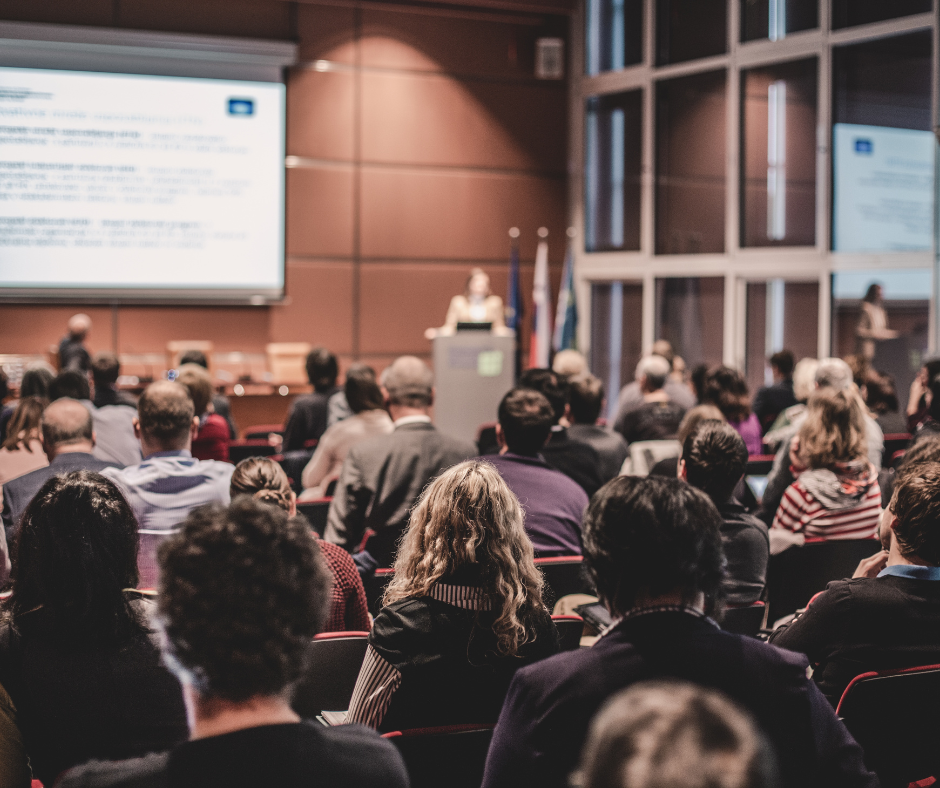
The Jobs and Skills Summit (the Summit) will bring together Australians, including unions, employers, civil society, and government, to discuss our shared economic challenges and propose both immediate and long-term solutions. The goal of the Summit is to find common ground on how Australia can build a bigger, better trained and more productive workforce; boost real wages and living standards; and create more opportunities for more Australians.
Australia’s economy and labour market face complex challenges. While the unemployment rate is at historic lows, a tight labour market has also brought challenges including widespread and acute skill shortages. Even before COVID-19, nominal wage growth had been weak and real wages had not risen significantly for around a decade. The ongoing effects of COVID-19, high inflation, rising interest rates, global economic uncertainty and disrupted supply chains further compound these challenges, which are holding back the potential of our economy and country.
At the same time, there is a huge opportunity to maximise jobs and opportunities from the increasing use of renewable energy, tackling climate change, digitalisation, growth in the care economy and developing our advanced manufacturing capabilities. If we work together to address these opportunities and challenges, we can meaningfully increase living standards for more Australians.
The Summit will cover five broad themes:
Maintaining full employment and growing productivity.
Boosting job security and wages.
Lifting participation and reducing barriers to employment.
Delivering a high-quality labour force through skills, training and migration.
Maximising opportunities in the industries of the future.
Throughout the Summit there will be a strong overarching focus on women’s experiences of the labour market and ensuring women have equal opportunities and equal pay.
This Issues Paper outlines the labour market challenges associated with these five themes. It is intended to provide Summit participants and the broader community with a common understanding of these issues so that we can begin working towards solutions to our shared economic challenges and ensure the labour market delivers good outcomes for all.
The Summit is the first stage in the process. Ideas raised at the Summit may also be explored further through the White Paper on Employment (the White Paper), which will map a comprehensive blueprint for Australia’s future labour market.
RDA Riverina Board meets in Lockhart
The RDA Riverina Board and Staff met in Lockhart on 11th August 2022. The Board and Staff were hosted by Lockhart Shire Council who provided a tour of the Galore Hill nature reserve and lookout.
The RDA Riverina Board and Staff met in Lockhart on 11th August 2022. The Board and Staff were hosted by Lockhart Shire Council who provided a tour of the Galore Hill nature reserve and lookout.
Following the tour, the Board met with Mayor Cr Greg Verdon, General Manager Peter Veneris, and Economic Development Officer Matthew Holt. Gordon Hinds from Better Energy presented on renewable energy projects in Lockhart Shire.
RDA Riverina thanks Lockhart Shire for their hospitality.


Spotlight on regional Australia ahead of Jobs and Skills Summit
Minister for Regional Development, Local Government and Territories Kristy McBain is making sure the skills shortage affecting regional Australia is a key focus of the Australian Government’s upcoming Jobs and Skills Summit.

Minister for Regional Development, Local Government and Territories Kristy McBain is making sure the skills shortage affecting regional Australia is a key focus of the Australian Government’s upcoming Jobs and Skills Summit.
Minister McBain is meeting with representatives from the Regional Development Australia (RDA) network and peak bodies from the local government sector throughout this week to talk through the challenges regional industries are facing in attracting and retaining skilled workers.
Key issues and themes from these roundtables will inform discussions at the Albanese Government’s Jobs and Skills Summit, to be held at Parliament House in Canberra on 1–2 September.
Skills shortages, housing supply, and how to retain and attract diverse and talented workers to regional areas are just some of the topics being explored across the online roundtables.
Minister McBain has also met with this year’s Rural Youth Ambassadors and spoke about barriers and opportunities in ensuring young people have the skills required to fill important roles in our regional communities both now and into the future.
The Jobs and Skills Summit will bring together Australians, including unions, employers, civil society and governments, to address our shared economic challenges.
The Summit will inform the Employment White Paper, which will help shape the future of Australia’s labour market. The wider community will be able to make submissions over the next 12 months.
For more information, visit www.treasury.gov.au/employment-whitepaper/jobs-summit.
Quotes attributable to Regional Development, Local Government and Territories Minister, the Hon Kristy McBain MP:
“The Jobs and Skills Summit is about addressing significant staff shortages and building better-trained, more productive workforces.
“Each part of Australia has unique challenges, but there are some key themes that occur right across the board and it’s these issues that the Jobs and Skills Summit needs to address.
“Living in a regional area, I see every day how staff shortages are affecting our communities. Whether it’s hospitality businesses closing their doors early, huge waitlists to get a tradie on a work site, delays in planning and development approvals or hundreds of job advertisements going unanswered, our regional communities are struggling with the lack of skilled staff.
“I’m working hard to hear from as many organisations and stakeholders as possible. I’ve specifically sought information from young rural Australians because often we talk about barriers to employment and training without actually listening to the young people who are tackling these issues every day.
“Regional and rural young people have fantastic ideas and they’re extremely innovative so I’m keen to tap into their collective knowledge and experience and give them a clear opportunity to contribute to the Jobs and Skills Summit.
“These roundtable discussions are an important part of making sure the voices of regional and rural communities and the local government sector are heard at the Summit.”
Fiona Phillips MP announced as Chair of the New South Wales Black Spot Consultative Panel
Fiona Phillips, Federal Labor Member for Gilmore, has been announced as the Chair for the New South Wales Black Spot Consultative Panel.

Fiona Phillips, Federal Labor Member for Gilmore, has been announced as the Chair for the New South Wales Black Spot Consultative Panel.
Black Spot Consultative Panels provide the opportunity for stakeholders to have a say in the project selection process, and ensure that nominations of the highest priority and importance to the local community are recommended for approval.
Assistant Minister for Infrastructure and Transport Carol Brown said “The Australian Government has committed $110 million per year to the Black Spot Program to improve road safety across the nation.
“This Government is investing in road safety right across the nation to ensure Australians get home safely every trip.”
The panel that reviews priorities for the program in New South Wales includes the representatives from the National Roads and Motorists’ Association, the Institute of Public Works Engineering Australia, NSW Police Force, the Federation of Parents & Citizens Associations of NSW, the Traffic Management Association of Australia, Local Government NSW and Transport for NSW.
Federal Member for Gilmore and Chair of the New South Wales Black Spot Consultative Panel Fiona Phillips said “I am privileged to have been named as the Chair of the New South Wales Black Spot Consultative Panel.
“I look forward to working with the panel that reviews priorities for the program in New South Wales including representatives from the National Roads and Motorists’ Association, the Institute of Public Works Engineering Australia, NSW Police Force, the Federation of Parents & Citizens Associations of NSW, the Traffic Management Association of Australia, Local Government NSW and Transport for NSW.
“Black Spot projects deliver safer roads throughout New South Wales.”
Apply now for Ready To Launch: an immersive 10-week program that will take your business idea to launch phase
Got a business idea but unsure where to start?
Apply now for Ready To Launch: an immersive 10-week program that will take your business idea to launch phase.

Got a business idea but unsure where to start?
Apply now for Ready To Launch: an immersive 10-week program that will take your business idea to launch phase.
At the end of this course, you will have:
· A lean business canvas (your roadmap to launch)
· Your idea validated by the market (your original idea may morph during this process)
· A pitch video that you can use as a tool for marketing and communicating your idea
· A transformed entrepreneurial mindset
· A community of fellow founders cheering you on.
This is for you if:
· You have a business idea but not sure where to start to get it off the ground
· You're already a founder and want to pivot into something new.
If that's you, you've landed in the right place.
Starts: Monday 12th September 2022. All sectors welcome to apply.
Applications close 5.00pm AEST 26 August 2022 (limited places).
For further information and to apply, click here https://www.surveymonkey.com/r/D2ZN35K.
First steps underway toward a new local TV prominence framework
Minister for Communications, the Hon Michelle Rowland MP, has today tasked the Future of Broadcasting Working Group to contribute to the initial design work for a new prominence framework, a key election commitment of the Albanese Government.

Minister for Communications, the Hon Michelle Rowland MP, has today tasked the Future of Broadcasting Working Group to contribute to the initial design work for a new prominence framework, a key election commitment of the Albanese Government.
The new – and legislated – framework will ensure Australian TV services can easily be found on connected TV platforms.
Minister Rowland also said the Albanese Government will commence a parallel engagement process with a range of additional parties at this early design stage.
These parties will include operating system and set-top-box providers such as Google, Apple, Amazon, Foxtel, Telstra and Fetch.
These are the first steps in the development of the prominence framework and will be followed by a wider public consultation process.
Informed by the views of stakeholders and interested parties, the Government intends to make a final decision on the form and construction of a framework by mid-2023, and move through to the drafting of legislation.
The Future of Broadcasting Working Group, an industry-led forum, was established in early 2022 to consider future television technologies and related market reforms.
It is comprised of free-to-air broadcasters, consumer bodies, transmission infrastructure providers and smart television manufacturers.
Quotes attributable to the Minister for Communications, the Hon Michelle Rowland MP:
“This is the first stage of an ongoing process to improve the prominence of local TV in Australia and I welcome the opportunity to meet with the Working Group today to set out our views and seek their input toward the new framework.
“Broadcasting services play a crucial role in supporting our sense of cultural identity and informing and entertaining all Australians; from news services to sport to entertainment and more.
“I am committed to modernising regulation for a sector that continues to deliver value for Australian citizens and consumers, and the economy broadly, and I welcome the views of industry ahead of a broader public consultation process later this year.”
A new tourism destination opens it's cellar door in the Snowy Valleys and visitors are in for a surprise
Ladbroken Distilling Co. opens tasting room to visitors to and celebrates its first year of trading with the launch of the “Cocktail Club” speakeasy.

Ladbroken Distilling Co. opens tasting room to visitors to and celebrates its first year of trading with the launch of the “Cocktail Club” speakeasy.
From humble beginnings as a home-based craft business launched 1 year ago the husband-and-wife team at Ladbroken Distilling Co. are thrilled to be opening their Tumbarumba distillery tasting room.
Visitors step into a different world when they open the shiny copper door and can expect to be taken on a taste adventure with tasting flights and samples available of the various spirits crafted on site. The space is compact but includes a tasting bar, a viewing window into the production area and large apothecary of ingredients on display so everyone has the chance to see the distillation process and botanical ingredients up close.
“I love the gasp of surprise that people make as they come in. The sumptuous décor makes it a warm and cosy place to gindulge in a new experience and learn a bit about our craft” said Robbie Ladbrook, who develops all the recipes for the gin range and runs the tasting room on the weekends.
“We are thrilled to be launching the ‘Cocktail Club’ on our first-year anniversary which will see the venue operate like a prohibition style speakeasy from 4pm-6pm on Saturday evenings (from July 16) serving up full serve drinks and cocktails using our gin”.

“It’s great to be able to finally welcome people to our site and introduce them not only to our craft and spirits but also show them the different plants that we grow on site and use in our gins. We find that people are dropping in because they are curious and because we are located right in the middle of town, they can walk to us as they wander along the creekscape visiting the sculptures or exploring town. We also have pooch friendly seating outdoors in the gazebo area and bike parking for those who have finished riding the rail trail,” said Robbie.
Reservations for the Cocktail Club can be booked online along with Distillery Discovery Experiences which are conducted each Saturday at midday allowing participants to discover first-hand how the spirits are made and bottled.
Visit www.ladbroken.com for more information and bookings.
“The venue is a welcome addition to the numerous award-winning cellar doors and foodie experiences already operating in the Snowy Valleys and Riverina region,” said Sarah Hope, Business Development Manager, Destination Riverina Murray.
Independent Review to Rejuvenate Infrastructure Australia
The Australian Government has today appointed Ms Nicole Lockwood and Mr Mike Mrdak AO to lead an independent review of Infrastructure Australia.

The Australian Government has today appointed Ms Nicole Lockwood and Mr Mike Mrdak AO to lead an independent review of Infrastructure Australia.
This review will consider Infrastructure Australia’s role as an independent adviser to the Commonwealth on nationally significant infrastructure priorities and advise on what changes may be needed to IA’s focus, priorities and – if necessary – legislation.
This review is an important first step in restoring Infrastructure Australia to its rightful place as an expert advisory body of national significance. The Government looks forward to a revitalised IA helping the Commonwealth deliver a better future for all Australians through its infrastructure policy and investment decisions.
The review’s Terms of Reference are set out below. A draft report is expected within three months, and a final report shortly thereafter.
Quotes attributable to Federal Minister for Infrastructure, Transport, Regional Development and Local Government, Catherine King
“Infrastructure Australia was created to provide expert advice to government regarding infrastructure priorities across the nation.
“In recent years, the organisation has been allowed to drift with partisan board appointments and a lack of clear direction. It’s clear a review has been necessary and that’s why Labor committed to one before the election.
“In Nicole Lockwood and Mike Mrdak, we have two of Australia’s pre-eminent infrastructure experts who will conduct a thorough and independent review of Infrastructure Australia and make recommendations to get it back on track.
“Our nation has big challenges ahead, whether that be in dealing with population growth, managing skills shortages, decarbonising the transport and infrastructure sector or dealing with the uptake of electric vehicles.
“This review and the changes it proposes will be essential in ensuring that the Australian Government receives the expert and non-partisan advice it needs to build a better future.
“I thank the board members, some of whom have agreed to step down, for their understanding and contribution as the Government reviews and refreshes Infrastructure Australia.
Review information
Nicole Lockwood
Ms Lockwood is the Chair of Infrastructure Western Australia, a member of the Boards of the Green Building Council of Australia, the WA Association for Mental Health, and is also a non-executive Director of NBN Co.
Mike Mrdak AO
Mr Mrdak is President and CEO for Australia and New Zealand of NEC. He is a previous Secretary of the Department of Infrastructure and Regional Development, and of the Department of Communications and the Arts.
Independent Review of Infrastructure Australia
Terms of Reference
1. The Review will examine Infrastructure Australia’s (IA’s) role as an independent adviser to
the Commonwealth on nationally significant infrastructure priorities, and its capacity to deliver on this role.
2. The Review will make recommendations on reforms that may be required to ensure IA is able
to fully deliver on its responsibilities, including but not limited to:
a. Functions
i. the advice and products for which IA is responsible, and whether these
remain fit-for-purpose
ii. how IA’s work relates to the work of state-level infrastructure bodies, and iii. how IA’s work addresses the priorities and requirements of the Australian
Government.
b. Governance and administration
i. the optimal size, mandate, responsibilities, and composition of the IA Board,
including the experience, skills, and expertise of members
ii. whether IA’s administrative arrangements are appropriate to support delivery
of its role and functions, and
iii. IA’s relationship with the responsible Minister.
c. Legislation
i. any legislative changes that may be required.
3. The Review will be conducted by Independent Reviewers and supported by the Department
of Infrastructure, Transport, Regional Development, Communications and the Arts.
4. The Review will provide a report to the Minister for Infrastructure, Transport, Regional
Development and Local Government.
Boosting data for SkyMuster NBN users in regional and rural Australia
Minister for Communications, the Hon Michelle Rowland MP welcomes NBN Co’s enhancements to Sky Muster Plus satellite services, which has the potential to provide a major boost to over 108,000 households and businesses in regional and rural Australia, allowing them to do more with their data.

Minister for Communications, the Hon Michelle Rowland MP welcomes NBN Co’s enhancements to Sky Muster Plus satellite services, which has the potential to provide a major boost to over 108,000 households and businesses in regional and rural Australia, allowing them to do more with their data.
This will improve the quality of life for people living and working in regional, rural and remote areas of Australia by reducing data constraints associated with accessing fast and reliable broadband.
For the first time, Sky Muster Plus customers can now access video streaming and Virtual Private Networks (VPN) for 16 hours a day, between midnight and 4pm, without it counting toward their monthly data allowance. Other online activities including emails, internet banking, online shopping audio streaming, video calling, and Wi-Fi calling will continue to be unmetered for the full 24 hours a day.
This change will enhance the service and productivity of businesses, and reduce cost of living pressures – particularly for the increased number of Australians continuing to work and study from home.
It also responds to continuing consumer demand for more data, including accessing more streaming and video-on-demand services, accessing live-stream and pre-recorded remote learning resources without interruption, and seamlessly connecting with family and friends.
This announcement delivers on the Labor Government’s commitment to increase NBN Satellite data allowance, unmetering Skymuster usage between midnight and 4 pm.
The enhanced product offering follows the Government’s $480 million investment into upgrading and expanding the NBN fixed wireless network, which will free up satellite capacity.
In addition to the initial enhancements announced by NBN Co last week, further enhancements to Sky Muster data inclusions will occur once the fixed wireless upgrade is complete.
For more information on NBN, visit https://www.infrastructure.gov.au/media-communications-arts/internet/national-broadband-network
NSW Settlement Strategy Survey
Multicultural NSW is creating the state's first Settlement Strategy to improve settlement journeys for individuals and families in NSW.

Have Your Say in the NSW Settlement Strategy
Help improve the settlement journey of refugees, asylum seekers, and people from similar backgrounds.
Multicultural NSW is creating the state's first Settlement Strategy to improve settlement journeys for individuals and families in NSW.
They want to hear from refugees, asylum seekers, and people from similar backgrounds living in NSW and the organisations and services that provide support to them. We encourage you to have your say by completing this online survey.
Your feedback will help them improve settlement journeys and experiences in the areas of:
Education and training
Employment
Health and wellbeing
Housing
Language services
Transport
Civic participation
Family and social support
Justice and law
Finance
The survey closes 5pm on Sunday 31 July.
Survey responses are confidential and will not be shared with anyone.
Low unemployment no cause for celebration in Riverina
The latest unemployment data released by the National Skills Commission shows unemployment in the Riverina remains low, with an average of 2.4% across the region.

The latest unemployment data released by the National Skills Commission shows unemployment in the Riverina remains low, with an average of 2.4% across the region. The highest rates were recorded in the Hay and Narrandera Shires (3.7%) with the lowest rates recorded in the Bland Shire (1.4%) and Lockhart Shire (1.5%).
Overall, unemployment rose slightly in the March quarter, but the rate is still one of the lowest recorded in the past decade. RDA Riverina CEO and Director of Regional Development Rachel Whiting says it’s no cause to celebrate, however, as the issue is that the Riverina has more jobs than people to fill them.
“In 2020, we surveyed Riverina employers and found that almost half could not find the staff they need and left roles unfilled, while almost 80% had trouble recruiting.
“This comes down to several factors including our ageing workforce and industry increasingly needing more workers. For example, we have up to 8000 construction jobs across the region and neighbouring regions and not enough skilled workers to meet that need.
“For the past 5 years, RDA Riverina has focused on developing strategies that will help meet the medium and long-term employment needs of the Riverina.”
Working with businesses to establish their needs and develop programs to assist them, RDA Riverina has developed Country Change to attract people from other places in Australia, Grow Our Own to build the skills of young people from within the region, JobsRiverina to help job seekers easily find work opportunities and Skilled Migration to help attract migrants to fill employers’ needs.

In 2021, RDA Riverina became a ‘Backbone Coordinator’ for the NSW Government’s $3 million Growing Regions of Welcome (GROW) program designed to help new migrants and refugees in Western Sydney find new opportunities to live and work in the regions.
“Leeton and Temora are both pilot towns for the Growing Regions of Welcome program in the Riverina, which will not only help address some of our skills shortages but also add to the cultural fabric of our communities. It is our hope that the Riverina becomes a prime choice for overseas workers.
“While it’s definitely a good thing that unemployment rates remain low, we need to consider the much broader employment problem we face here and continue to do all we can to bring skilled workers to the Riverina and grow our own talent and opportunities.”